sermon news

Sermon preached at a Zoom service with the congregation of Skopje in the Republic of N. Macedonia. Service is for the 4 th Sunday of Pentecost

Preacher: Revd. Canon Leonarad Doolan


Readings: Gen 21, 8-21; Rom 6, 1-11; Matt 10, 24-39


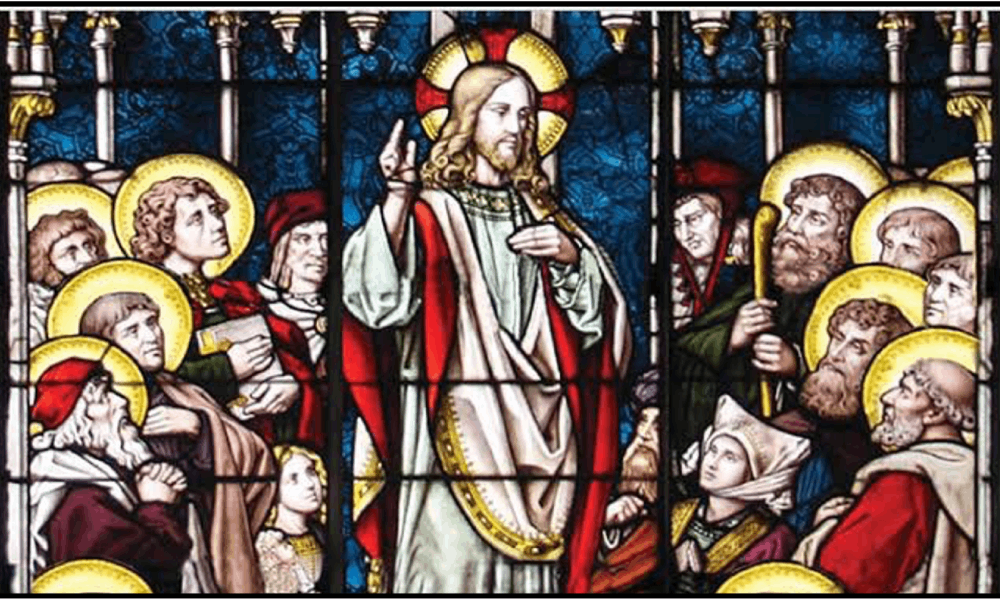
‘What I say to you in the dark, tell in the light; and what you hear whispered, proclaim from the housetops.’ Matthew 10, 27

It has always been a fascination of scholars and faithful enquirers  to know what any ‘secret teaching’ of Jesus might be. Such speculation has led at various times to turbulent relationships within the history of the Church – especially with that heretical group known as the Gnostics. They are even referred to in the New Testament – the people who claim to have some special mystical ‘gnosis’, knowledge, ( handed on secretly from Christ.) 1 Timothy 6, 20-21

I suppose it is fair enough to ask the question what else did Jesus say and do that is not recorded in any of the four gospels? We are curious, inquisitive searchers of material.

The words I quoted from the gospel of Matthew are set within a passage that is not so easy to understand. Even a bald man like me is glad to know that God knows even the hairs of my head! However, also in this passage we hear of challenging messages – I have not come to bring peace but a sword; those who find their life will lose it, and those who lose their life for my sake will find it. (Matthew 10, 39)

Messages like this are generally considered as a group as the ‘hard sayings’ of Jesus. Gentle Jesus, meek and mild is hardly the image conjured up when he tells us about the disintegration between blood relatives and relatives through marriage caused by the blade of his sharp message – though in reality we can make a pretty good job of this ourselves, without any outside influences.

Set alongside the gospel reading, the OT and NT readings are not easily digestible either. So the preacher has a job in hand to try and interpret all of this. Or the preacher might try to avoid doing so. Let’s see how it goes.


‘What I say to you in the dark, tell in the light; and what you hear whispered, proclaim from the housetops.’

When I hear this my mind travels to Jerusalem, and to the pilgrimages I led as a parish priest. On the itinerary there is always a visit to the Eleona Church on the Mount of Olives, and is one of the 4th century basilica churches founded by Empress St. Helena, mother of the Emperor St. Constantine.

It is also called the Pater Noster Church, the Our Father Church. In a small cave there is the site believed to be where Christ responded to the request of his disciples, ‘Lord, teach us to pray’. In this small underground cavern, seated with his 12 disciples, Christ then proceeds to tell them, in the quiet secrecy of the place, the words we know as the Lord’s Prayer.

It seems to me that never was such a great example of bringing into the light something Christ said in the darkness, and now it is proclaimed on the rooftops. Never was there a prayer that more identifies the world’s Christians, as followers of the One Lord. Roman Catholics, Orthodox, Anglicans, Protestants –  whether Pentecostal, Baptist, Methodist, or whatever, say this prayer.

What I always loved at this holy site is the stones set around the outer wall of the compound, on which is carved the words of the Lord’s Prayer in dozens of languages – including, believe it or not, Doric, which is a Scottish dialect from the NE of Scotland.

Oor Faither in heiven, hallowt be Thy name. Doric speaking Scots must be thrilled about this- however few they are. I actually knew a man from Cullen in Aberdeenshire who spoke Doric.

To scripture – Isaac was the son of Abraham and Sarah. You will recall that the story tells us that Sarah was barren and elderly, and by God’s miracle Abraham is told that she will have a child. Abraham scoffs at the idea, but it is fulfilled, and Isaac is the fruit of her womb. But Abraham had a son already – the child was the offspring of a slave girl called Hagar. Potentially this creates problems and awkwardness. Such situations often do even in our own time – especially at the reading of Last Wills and Testaments. The scriptures don’t seem to treat this

reality as if it were an issue. We should remember that the Abrahamic period predates the injunctions towards monogamy, so culturally Abraham was not really doing anything controversial.

Anyway the result is that Isaac has to be the favoured one as he is the issue of Sarah – and as a result of the promise that God has made with Abraham to be the father of many nations. Hagar and her son are given provisions and sent on their way to live eventually in the wilderness of Paran.

This son’s name is none other than Ishmael, who gives his name to the Ishmaelites. I don’t need to tell you that it is through Ishmael that Muslims claim their descent from Abraham. Some of you may know much more about this than I do – but you can imagine it is part of the historic conflict.

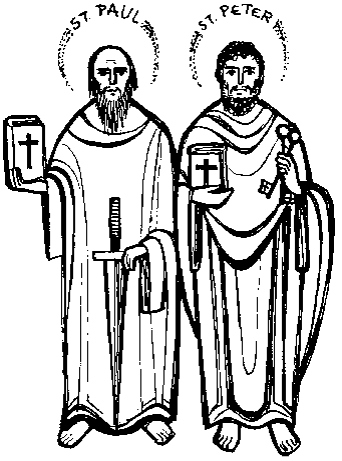
St. Paul uses some of this material as he argues the case between the religion he departed from and the faith he now espouses – his faith in the Risen Lord Jesus Christ.

READ MORE

Blog

Service Sheet for Sunday 21st June 2026 – 4th Sunday after Trinity


Celebrant: Fr Benjamin Drury

Sung Mass for the twelfth Sunday in Ordinary Time

Processional: 433 (Hanover) O worship the King

Resp. Psalm: Ps. 69

Gradual: 272 (All for Jesus) All for Jesus! All for Jesus!

Offertory: 439 (Gerontius) Praise to the holiest in the height

Communion: 472 (Contemplation) When all thy mercies, O my God

Recessional: 498 (Everton) Son of God, eternal Saviour

All are welcome to stay for refreshments after the liturgy.

The Mass setting is Sir James Macmillan’s ‘St. Anne’s Mass’


A reading from the Book of Exodus (19: 2-6)

Jeremiah said: I hear so many disparaging me, ‘“Terror from every side!” Denounce him! Let us denounce him!’ All those who used to

be my friends watched for my downfall, ‘Perhaps he will be seduced into error. Then we will master him and take our revenge!’ But the Lord is at my side, a mighty hero; my opponents will stumble, mas­tered, confounded by their failure; everlasting, unforgettable dis-

grace will be theirs. But you, O Lord of Hosts, you who probe with justice, who scrutinise the loins and heart, let me see the venge-

ance you will take on them, for I have committed my cause to you.

Sing to the Lord, praise the Lord, for he has delivered the soul of the needy from the hands of evil men.

The Word of the Lord: Thanks be to God.


Resp. Psalm: Ps. 69: In your great love, answer me, O Lord

It is for you that I suffer taunts, that shame covers my face,

that I have become a stranger to my brothers, an alien to my own mother’s sons.

I burn with zeal for your house

and taunts against you fall on me. (Response)


This is my prayer to you,

my prayer for your favour.

In your great love, answer me, O God, with your help that never fails:

Lord, answer, for your love is kind;

in your compassion, turn towards me. (Response)


The poor when they see it will be glad and God-seeking hearts will revive;

for the Lord listens to the needy

and does not spurn his servants in their chains.

Let the heavens and the earth give him praise,

the sea and all its living creatures. (Response)


A reading from the letter of St. Paul to the Romans (5: 12-15)

Sin entered the world through one man, and through sin death,

and thus death has spread through the whole human race because everyone has sinned. Sin existed in the world long before the Law was given. There was no law and so no one could be accused of the sin of ‘law-breaking’, yet death reigned over all from Adam to Moses, even though their sin, unlike that of Adam, was not a matter of breaking a law.

Adam prefigured the One to come, but the gift itself considera­bly outweighed the fall. If it is certain that through one man’s fall so many died, it is even more certain that divine grace, coming

through the one man, Jesus Christ, came to so many as an abundant free gift.

The Word of the Lord: Thanks be to God.


Gospel acclamation: Alleluia, alleluia! The Spirit of truth will be my witness; and you too will be my witnesses. Alleluia!

The Lord be with you. And also with you.

+ A Reading from the Holy Gospel according to Matthew (10: 26-33)

Glory to you, O Lord.

Jesus instructed the Twelve as follows: ‘Do not be afraid. For

everything that is now covered will be uncovered, and everything

now hidden will be made clear. What I say to you in the dark, tell in the daylight; what you hear in whispers, proclaim from the house-

tops.

‘Do not be afraid of those who kill the body but cannot kill the soul; fear him rather who can destroy both body and soul in hell.

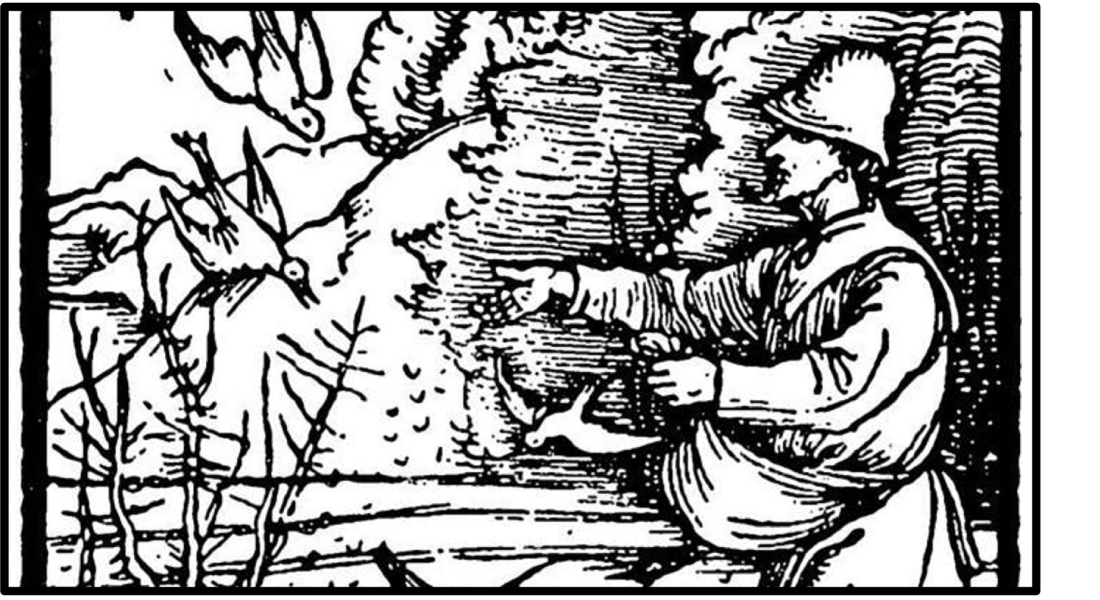
Can you not buy two sparrows for a penny? And yet not one falls to the ground without your Father knowing. Why, every hair on your head has been counted. So there is no need to be afraid; you are worth more than hundreds of sparrows.

‘So if anyone declares himself for me in the presence of men, I will declare myself for him in the presence of my Father in heaven. But the one who disowns me in the presence of men, I will disown in the presence of my Father in heaven.’

The Gospel of the Lord: praise to you, O Christ

READ MORE

The Lord is my Shepherd blog

Service Sheet for Sunday 14th June, 11th Sunday in Ordinary Time


Celebrant Fr Benjamin Drury

Sung Mass for the eleventh Sunday in Ordinary Time

Processional: 408 (Blaenwern) Love divine, all loves excelling

Resp. Psalm: Ps. 100

Gradual: 482 (Gott Sei Dank) Spread, O spread, thou mighty word

Offertory: 214 (Deus Tuorum Militum) Let the round world with songs rejoice

Communion: 387 (Quem Pastores) Jesus, good above all other

Recessional: 431 (Hereford) O thou who camest from above All are welcome to stay for refreshments after the liturgy.

The Mass setting is Sir James Macmillan’s ‘St. Anne’s Mass’


A reading from the Book of Exodus (19: 2-6)

From Rephidim the sons of Israel set out again; and when they reached the wilderness of Sinai, there in the wilderness they

pitched their camp; there facing the mountain Israel pitched camp.

Moses then went up to God, and the Lord called to him from

the mountain, saying, ‘Say this to the House of Jacob, declare this to the sons of Israel, “You yourselves have seen what I did with

the Egyptians, how I carried you on eagle’s wings and brought you to myself. From this you know that now, if you obey my voice and hold fast to my covenant, you of all the nations shall be my very own for all the earth is mine. I will count you a kingdom of priests, a consecrated nation.”’

The Word of the Lord: Thanks be to God.


Resp. Psalm: Ps. 100: We are his people, the sheep of his flock.

Cry out with joy to the Lord, all the earth.

Serve the Lord with gladness.

Come before him, singing for joy. (Response)


Know that he, the Lord, is God.

He made us, we belong to him,

we are his people, the sheep of his flock. (Response)


Indeed, how good is the Lord, eternal his merciful love.

He is faithful from age to age. (Response)


A reading from the letter of St. Paul to the Romans (5: 6-11)

We were still helpless when at his appointed moment Christ died for sinful men. It is not easy to die even for a good man – though of course for someone really worthy, a man might be prepared to die –but what proves that God loves us is that Christ died for us while we were still sinners. Having died to make us righteous, is it likely that he would now fail to save us from God’s anger? When we were reconciled to God by the death of his Son, we were still enemies;

now that we have been reconciled, surely we may count on being

saved by the life of his Son? Not merely because we have been rec­onciled but because we are filled with joyful trust in God, through our Lord Jesus Christ, through whom we have already gained our reconciliation.

The Word of the Lord: Thanks be to God.


Gospel acclamation: Alleluia, alleluia! The sheep that belong to me listen to my voice, says the Lord,

I know them and they follow me. Alleluia! The Lord be with you. And also with you.

+ A Reading from the Holy Gospel according to Matthew (9: 36-10-8)

Glory to you, O Lord.

When Jesus saw the crowds he felt sorry for them because they were harassed and dejected, like sheep without a shepherd. Then he said to his disciples, ‘The harvest is rich but the labourers are few, so

ask the Lord of the harvest to send labourers to his harvest.’

He summoned his twelve disciples, and gave them authority over unclean spirits with power to cast them out and to cure all kinds of diseases and sickness.

These are the names of the twelve apostles: first, Simon who is called Peter, and his brother Andrew; James the son of Zebedee,

and his brother John; Philip and Bartholomew; Thomas, and Mat­thew the tax collector; James the son of Alphaeus, and Thaddaeus;

Simon the Zealot and Judas Iscariot, the one who was to betray him. These twelve Jesus sent out, instructing them as follows:

‘Do not turn your steps to pagan territory, and do not enter any Samaritan town; go rather to the lost sheep of the House of Isra­el. And as you go, proclaim that the kingdom of heaven is close

at hand. Cure the sick, raise the dead, cleanse the lepers, cast out devils. You received without charge, give without charge.’

The Gospel of the Lord: praise to you, O Christ


O Lord, who never failest to help and govern them who thou dost bring up in thy stedfast fear and love: Keep us, we beseech thee,

under the protection of thy good providence, and make us to have a perpetual fear and love of thy holy Name; through Jesus Christ our Lord. Amen.(BCP Collect: Second Sunday after Trinity)


Church Open: Tuesday-Saturday, 10 a.m.-2 p.m.

Services: Unless noted, liturgies are followed by refreshments

Sunday 14th June: 6 p.m.; Choral Evensong (S. Cantorum S. Pauli)

Wednesday 17th June: 10 a.m.; Low Mass Sunday 21st June: 10 a.m.; Sung Mass

Study group & walking group: details from Father Benjamin.

Short prayer booklets (Prime and Compline) are available, please speak to Oliver Knight


Donate electronically by scanning the QR codeQR Code

the Church does not receive any funding from the

Church of England or the British Government and is reliant on the goodwill of congregants and visitors. We thank you for your support.


Senior Chaplain: Fr. Benjamin Drury SSC

frbenjamindrury@gmail.com; Home tel.: 210 72 14 906

anglican@otenet.gr

Assistant Chaplain: Deacon Christine Saccali: 697 737 7655 Church of Sweden: Fr. Bjorn Kling: 694 6072428

Facebook @AnglicanAthens                    www.anglicanchurchathens.gr

saintpaulsathens.bsky.social

Corpus Christi

Service Sheet for Sunday 7th June – Corpus Christi

Celebrant: Fr Benjamin Drury

Sung Mass for Corpus Christi

Processional: 52 (Was Lebet) O worship the Lord in the beauty of holiness

Resp. Psalm: Ps. 147

Gradual: 307 (Divine Mysteries) Sweet Sacrament divine

Offertory: 302 (Song I) O thou, who at thy Eucharist didst pray Communion: 305 (Anima Christi) Soul of my Saviour, sanctify my breast Please refer to the additional sheet for the hymn for the procession with the Blessed Sacrament

Recessional: 296 (St. Helen) Lord, enthroned in heavenly splendour

All are welcome to stay for refreshments after the liturgy.

The Mass setting is Sir James Macmillan’s ‘St. Anne’s Mass’


A reading from the Book of Deuteronomy (8: 2-3, 14-16)

Moses said to the people: ‘Remember how the Lord your God led

you for forty years in the wilderness, to humble you, to test you and know your inmost heart – whether you would keep his command­ments or not. He humbled you, he made you feel hunger, he fed

you with manna which neither you nor your fathers had known, to make you understand that man does not live on bread alone but

that man lives on everything that comes from the mouth of the Lord.

‘Do not become proud of heart. Do not forget the Lord your God who brought you out of the land of Egypt, out of the house of slav­ery: who guided you through this vast and dreadful wilderness, a land of fiery serpents, scorpions, thirst; who in this waterless place brought you water from the hardest rock; who in this wilderness fed you with manna that your fathers had not known.’

The Word of the Lord: Thanks be to God.


Resp. Psalm: Ps. 147: Praise the Lord, Jerusalem!

O praise the Lord, Jerusalem!

Zion, praise your God!

He has strengthened the bars of your gates

he has blessed the children within you. (Response)


He established peace on your borders, he feeds you with finest wheat.

He sends out his word to the earth

and swiftly runs his command. (Response)


He makes his word known to Jacob, to Israel his laws and decrees.

He has not dealt thus with other nations;

he has not taught them his decrees. (Response


A reading from the first letter of St. Paul to the Corinthians (10: 16-17)

The blessing-cup that we bless is a communion with the blood of Christ, and the bread that we break is a communion with the body of Christ. The fact that there is only one loaf means that, though there are many of us, we form a single body because we all have a share in this one loaf.

The Word of the Lord: Thanks be to God.


Gospel acclamation: Alleluia, alleluia! I am the living bread which has come down from heaven,

says the Lord. Anyone who eats this bread will live for ever. Alleluia!

The Lord be with you. And also with you.

+ A Reading from the Holy Gospel according to John (6: 51-58)

Glory to you, O Lord.

Jesus said to the crowd:

‘I am the living bread which has come down from heaven. Anyone who eats this bread will live for ever;

and the bread that I shall give is my flesh, for the life of the world.’

Then the Jews started arguing with one another: ‘How can this man give us his flesh to eat?’ they said. Jesus replied:

‘I tell you most solemnly,

if you do not eat the flesh of the Son of Man and drink his blood, you will not have life in you.

Anyone who does eat my flesh and drink my blood has eternal life,

and I shall raise him up on the last day.

For my flesh is real food

and my blood is real drink.

He who eats my flesh and drinks my blood lives in me

and I live in him.

As I, who am sent by the living Father, myself draw life from the Father,

so whoever eats me will draw life from me. This is the bread come down from heaven; not like the bread our ancestors ate:

they are dead,

but anyone who eats this bread will live for ever.’ The Gospel of the Lord: praise to you, O Christ


O God, the strength of all them that put their trust in thee, merci­fully accept our prayers; and because through the weakness of our  mortal nature we can do no good thing without thee, grant us the help of thy grace, that in keeping of thy commandments we may please thee, both in will and deed; through Jesus Christ our Lord. Amen. (BCP Col­lect: First Sunday after Trinity)


READ MORE

Trinity

Service Sheet for Trinity Sunday – 31st May 2026


Sung Mass for Trinity Sunday

Processional: 146 (Nicaea) Holy, Holy, Holy, Lord God almighty

Resp. Psalm: [Canticle] Daniel 3: 52-56

Gradual: 358 (Rievaulx) Father of heaven, whose love profound

Offertory: 159 (St. Patrick’s Breastplate) I bind unto myself to this day

Communion: 147 (St. Flavian) Most ancient of all mysteries

Recessional: 373 (Coe Fen) How shall I sing that majesty

All are welcome to stay for refreshments after the liturgy.

The Mass setting is Sir James Macmillan’s ‘St. Anne’s Mass’


A reading from the Book of Exodus (34: 4-6, 8-9)

With the two tablets of stone in his hands, Moses went up the

mountain of Sinai in the early morning as the Lord had command­ed him. And the Lord descended in the form of a cloud, and Moses stood with him there.

He called on the name of the Lord. The Lord passed before him and proclaimed, ‘Lord, Lord, a God of tenderness and compassion, slow to anger, rich in kindness and faithfulness.’ And Moses bowed down to the ground at once and worshipped. ‘If I have indeed won your favour, Lord,’ he said, ‘let my Lord come with us, I beg. True,

they are a headstrong people, but forgive us our faults and our sins, and adopt us as your heritage.’

The Word of the Lord: Thanks be to God.


Resp. Psalm: [Canticle] Daniel 3: 52-56

To you glory and praise for evermore.

You are blest, Lord God of our fathers. To you glory and praise for evermore.

Blest your glorious holy name. To you glory and praise for evermore.

You are blest in the temple of your glory. To you glory and praise for evermore.

You are blest on the throne of your kingdom. To you glory and praise for evermore.

You are blest who gaze into the depths. To you glory and praise for evermore.

You are blest in the firmament of heaven. To you glory and praise for evermore.


A reading from the second letter of St. Paul to the Corinthians (13: 11-13) Brothers, we wish you happiness; try to grow perfect; help one an­other. Be united; live in peace, and the God of love and peace will be with you.

Greet one another with the holy kiss. All the saints send you greetings.

The grace of the Lord Jesus Christ, the love of God and the fel­lowship of the Holy Spirit be with you all.

The Word of the Lord: Thanks be to God.


Gospel acclamation: Alleluia, alleluia!

Glory be to the Father, and to the Son, and to the Holy Spirit; the God who is, who was, and who is to come. Alleluia!

The Lord be with you. And also with you.

+ A Reading from the Holy Gospel according to John (3: 16-18)

Glory to you, O Lord.

Jesus said to Nicodemus:

‘God loved the world so much that he gave his only Son, so that everyone who believes in him may not be lost

but may have eternal life.

For God sent his Son into the world not to condemn the world,

but so that through him the world might be saved. No one who believes in him will be condemned;

but whoever refuses to believe is condemned already,

because he has refused to believe in the name of God’s only Son.’

The Gospel of the Lord: praise to you, O Christ


Verses to be sung between verses five and six of the offertory hymn:

1.Christ be with me, Christ within me,

Christ behind me, Christ before me,

Christ beside me, Christ to win me,

Christ to comfort and restore me.


2.Christ beneath me, Christ above me,

Christ in quiet, Christ in danger,

Christ in hearts of all who love me,

Christ in mouth of friend and stranger.


READ MORE

sermon news

Sermon Preached on Pentecost Sunday 24 May 2026 (in the western calendar)

Revd. Canon Leonard Doolan – St Paul’s Athens


The Jewish feast of Shavuot is the day when the first fruits of the land were offered in the Temple. On this day the Book of Ruth is read in synagogues, telling how the Moabite widow called Ruth, and her mother-in law, Naomi, meet the owner of the land, Boaz, while they were out gleaning in the fields. Ruth later married Boaz.

Shavuot is also the day when, just seven weeks after the Hebrew people departed from Egypt on their 40 year long journey in the wilderness, recorded in the Book of Exodus, Moses receives the Ten Commandments from God on Mount Sinai. Sinai was observed to be covered in smoke, because God had descended upon it like fire. Thunder and lightning filled the air.

It was on this Jewish feast, according to St. Luke’s account in the Acts of the Apostles, that the followers of Jesus, all Jewish, gathered in one place. The experience that follows is replete with graphic details.

Sound, like a violent storm wind; tongues of fire leaping about. The wind-like sound fills the room, and the flames perch on each of them. This describes the Holy Spirit – this is the first experience for followers of Jesus of the Holy Spirit. This is the Christian Shavuot – not the law being given, but grace; grace upon grace. This is the Christian Shavuot – not the first fruits from the harvest being presented, but the first fruits of the Holy Spirit.

Rooted in tradition, rich with bright images, resonant with the scriptures of the old dispensation, this is Christian Pentecost.


What we are told next is an extraordinary scene of diversity in unity. Oh how our world cries out in anguish for this experience! So many nationalities, and ethnic differences finding one voice, but not losing their own distinct language. The one voice of God in the Holy Spirit is being received and replicated in global diversity. Here we have the reverse of the Tower of Babel, the story that tells of the division that comes as a result of human pride and arrogance, and a rejection for the need of God in human life.

Babel feels a bit like living in our world right now, doesn’t it! Pentecost is a restoration of humanity in all its glorious difference – unity in diversity; not some sort of false friendship or artificial bon-homie, because the scriptures tell us the disciples haven’t even been to the pub, local bar, or ouzeri.

This feast of Pentecost is the birth of something new. A new creation is brought forth – St. Paul speaks of the groaning of the world, in birth pangs, waiting for new birth in the Holy Spirit. This is a neo-natal moment in the history of cosmic events.

‘Our Father, who art in heaven…’ we all know the rest of it. It is of course, the first few words of our Lord’s Prayer. Few things give me greater joy in church life than when a congregation of diverse nationalities and ethnicities prays this prayer each one in her or his first tongue. In this simple example we get a glimpse into that first Pentecost – many languages, but one voice, many different nationalities, but one God and Father. We each say it in our own tongue, but we each know what it is we are doing, and to whom we are speaking – ‘Our Father, who art in heaven…’

It is St. Peter who seeks to make some sense of what has occurred at Pentecost. It is not a drunken babble, though they are all soaked in Spirit, but rather the fulfilment of promise, a new dispensation, a new covenant.

St. Peter (Acts 2, 17-18) refers to the prophet Joel, to beautiful words that have always had great meaning to me from my first experiences of working with the Anglican church of Cameroon: ‘In the last days it will be, God declares, that I will pour out my Spirit upon all flesh, and your sons and your daughters shall prophesy, and your young men shall see visions, and your old men shall dream dreams. Even upon my slaves, both men and women, in those days, I will pour out my Spirit; and they shall prophesy’. (Joel 2, 28-29).

I well remember on one of my visits to the Anglican Church in Cameroon, that I went to a very remote village, to meet with a young Anglican evangelist. The village was in a small Muslim dominated area in the South West region – one of the regions of Cameroon currently overwhelmed by a civil war. The church was just a small hall, and in one corner there was a little room. This was the living quarters of the young pastor, who faithfully led a small but committed congregation there. The community was poor, and he had only a suitcase with some clothes, a mattress, and a bible.

He asked me to read from the bible for him, and I chose that passage from the book of Joel. It made a lasting impression on me. Here was one of God’s faithful servants filled with the grace of the Holy Spirit and a burning passion for the gospel of Jesus Christ. He seemed to be a living example of one of the young men who saw the vision promised by God in a congregation with a number of old men who had dreamt their dreams.

This envisioning of individuals and whole Christian communities is the gifting of God’s Holy Spirit, freely and graciously poured out, just tipped out of the bucket of God’s love for humanity.

The experience of that first Christian Pentecost on the feast of Shuavat, vividly exposes the sheer lack of ability on God’s part to differentiate – dare I say that – yes! for in God there is no partiality (Romans 2, 11). So, that list of different nationalities who understood their unity in diversity, and those referred to in Joel’s prophecy, underpins the universality of this event that we celebrate today. And we celebrate not just an event, but truth itself. Not your truth, nor my truth, nor any political hijacking of truth, but absolute and empirical truth.

We are told in St. John’s gospel (John 14, 16) about the sending of the Advocate – the Paraclete – the Spirit that will lead us into all truth, because the Holy Spirit is the Spirit of truth. (John 17, 17)

Our Lord, before his glorification on the cross, speaks of the coming of this Spirit, the Spirit that will be sent by God as the evidence of his universal presence in his Creation. We use in our liturgy the Greek originated word ‘epiklisis’ for such sacred moments. This word shares a root with the word ‘paraclete’ which can be translated into the Latin form of ‘advocate’. At the ‘epiklisis’ we cry out with tongue and heart for God’s Holy Spirit to consecrate, to enable holiness to become visible and incarnate in things – things that after we have called for the Holy Spirit become ‘holy things for God’s holy people.’

Send the Holy Spirit on this water for sanctifying someone in baptism; send the Holy Spirit on this bread and wine that they become the holy gifts of Christ’s holy meal; send the Holy Spirit, Lord, on your people. Consecrate us in the truth!

This is the truth that we all need to be truly human, to reach our maximum potential, and to aspire to become everything in completeness that God wills us to be. This is the truthfulness that we need to see glimmering shards of in our politicians as they lead our public, national and international life together.

‘When the Spirit comes he will prove the world wrong about sin and righteousness and judgement; about sin because they do not believe in me, about righteousness because I am going to the Father, and you will see me no longer; about judgement, because the ruler of this world has been condemned’. (John 16, 8-11).

Today we are reminded that God’s Holy Spirit leads us into all truth: truth about God the Father, maker of heaven and earth, of things seen and unseen; truth about his Christ whom he sent into the world who died for all of us; and the truth that God poured out on the world his Holy Spirit and renews the face of the earth. Today is not just a day when the disciples received a gift – it is a cosmic event, for every tribe and nation and language, testifying to the cosmic Christ, the ruler of all, of everything.

This is the spirit-filled truth that we celebrate today. If it is truth, then it is non-negotiable. This belief cannot be compromised, or nibbled at to make it more palatable in our multi-faith world and society. Either this is the truth into which the Holy Spirit leads us, or it is not.

If this feels absolutist in a world where everything is relative, where beliefs are diluted to make them more popular, where the attitude of ‘that is your truth, this is my truth’ prevails – let us remind ourselves as individuals, as the Church, as this church congregation right here and now, you and me together, what the fruits of this Spirit are: ‘love, joy, peace, forbearance, kindness, goodness, faithfulness, gentleness and self control.’ (Galatians 5, 22-23).


How can any one of these be considered undesirable to the human condition? How can they be considered in any way characteristics that are not of universal blessing. If we could only be converted a little to all or some of these gifts we would all know what it is to be more authentically real, more genuinely human.

The only problem is that all too often we do not nurture these gifts personally, and exhibit them generally. It can be just as bad in church life as it is more generally. This is a profound barrier to our life together in the Trinity. ‘Lord, send your Holy Spirit that we might be consecrated in the truth and send us to be consecrators of your creation.’

Come Holy Ghost our souls inspire,

And lighten with celestial fire;

Thou the anointing Spirit art,

Who dost thy sevenfold gifts impart.

Teach us to know, the Father, Son,

And thee, of Both, to be but One;

That through the ages all along

This may be our endless song,


Praise to thy eternal merit,

Father, Son, and Holy Spirit.  Amen.     (NEH 138, vs 4)

Peace

Service Sheet for Sunday 24th May – Pentecost – Whitsunday

Celebrant & Preacher

The Revd. Canon Leonard Doolan

Sung Mass for Pentecost-Whitsunday

Processional: 137 (Down Ampney) Come down, O Love divine

Resp. Psalm: Ps. 104 (537 in the New English Hymnal)

Gradual: 136 (Wareham) Rejoice, the year upon its way

Hymn after Homily: (Veni Creator) Come, Holy Ghost, our souls inspire

Offertory: 142 (Grafton) Sing to him in whom creation

Communion: 342 (Dominica) Breathe on me, Breath of God

Recessional: 409 (Woodlands) Love of the Father, love of God the Son


All are welcome to stay for refreshments after the liturgy.

The Mass setting is Sir James Macmillan’s ‘St. Anne’s Mass’

A reading from the Acts of the Apostles (1: 12-14)

When Pentecost day came round, they had all met in one room,

when suddenly they heard what sounded like a powerful wind from heaven, the noise of which filled the entire house in which they

were sitting; and something appeared to them that seemed like tongues of fire; these separated and came to rest on the head of each of them. They were all filled with the Holy Spirit, and be-

gan to speak foreign languages as the Spirit gave them the gift of speech.

Now there were devout men living in Jerusalem from every na­tion under heaven, and at this sound they all assembled, each one bewildered to hear these men speaking his own language. They were amazed and astonished. ‘Surely’ they said ‘all these men

speaking are Galileans? How does it happen that each of us hears them in his own native language? Parthians, Medes and Elamites; people from Mesopotamia, Judaea and Cappadocia, Pontus and

Asia, Phrygia and Pamphylia, Egypt and the parts of Libya round Cyrene; as well as visitors from Rome – Jews and proselytes alike –Cretans and Arabs; we hear them preaching in our own language about the marvels of God.’

The Word of the Lord: Thanks be to God.


Resp. Psalm: Ps. 104: Send forth your Spirit, O Lord, and renew the face of the earth (text at 537 in the New English Hymnal)

A reading from the first letter of St. Paul to the Corinthians (12: 3-7, 12-13)

No one can say, ‘Jesus is Lord’ unless he is under the influence of the Holy Spirit.

There is a variety of gifts but always the same Spirit; there are all sorts of service to be done, but always to the same Lord; work­ing in all sorts of different ways in different people, it is the same

God who is working in all of them. The particular way in which the Spirit is given to each person is for a good purpose.

Just as a human body, though it is made up of many parts, is a

single unit because all these parts, though many, make one body, so it is with Christ. In the one Spirit we were all baptised, Jews as well as Greeks, slaves as well as citizens, and one Spirit was given to us

all to drink.

The Word of the Lord: Thanks be to God.


Gospel acclamation: Alleluia, alleluia!

Come, Holy Spirit, fill the hearts of your faithful and kindle in them the fire of your love. Alleluia! The Lord be with you. And also with you.

+ A Reading from the Holy Gospel according to John (20: 19-23)

Glory to you, O Lord.

In the evening of the first day of the week, the doors were closed in the room where the disciples were, for fear of the Jews. Jesus came and stood among them. He said to them, ‘Peace be with you’, and

showed them his hands and his side. The disciples were filled with joy when they saw the Lord, and he said to them again, ‘Peace be with you.

‘As the Father sent me, so am I sending you.’

After saying this he breathed on them and said: ‘Receive the Holy Spirit.

For those whose sins you forgive, they are forgiven;

for those whose sins you retain, they are retained.’

The Gospel of the Lord: praise to you, O Christ

READ MORE

Ascension

Service Sheet for Sunday 17th May – Seventh Sunday of Easter – Ascensiontide

Celebrant: Fr. Benjamin Drury

Sung Mass for the Sixth Sunday of Easter

Processional: 130 (Llanfair) Hail the day that sees him rise

Resp. Psalm: Ps. 27

Gradual: 310 (Offertorium) We hail thy presence glorious

Offertory: 109 (Salve Festa Dies) Hail thee, Festival Day

Communion: 271 (Hyfrydol) Alleluya, sing to Jesus

Recessional: 432 (Regnator Orbis) O what their joy and their glory must be


The mass setting (Kyrie, Gloria, Creed, Sanctus, Agnus Dei) begins at page 562 in the New English Hymnal.

All are welcome to stay for refreshments after the liturgy.


A reading from the Acts of the Apostles (1: 12-14)

After Jesus was taken up into heaven the apostles went back from the Mount of Olives, as it is called, to Jerusalem, a short distance away, no more than a sabbath walk; and when they reached the

city they went to the upper room where they were staying; there were Peter and John, James and Andrew, Philip and Thomas, Bart-

holomew and Matthew, James son of Alphaeus and Simon the Zeal­ot, and Jude son of James. All these joined in continuous prayer, together with several women, including Mary the mother of Jesus, and with his brothers.

The Word of the Lord: Thanks be to God.


Resp. Psalm: Ps. 27: I am sure I shall see the Lord’s goodness in the land of the living.

The Lord is my light and my help;

whom shall I fear?

The Lord is the stronghold of my life;

before whom shall I shrink? (Response)


There is one thing I ask of the Lord,

for this I long,

to live in the house of the Lord,

all the days of my life,

to savour the sweetness of the Lord,

to behold his temple. (Response)


O Lord, hear my voice when I call;

have mercy and answer.

Of you my heart has spoken:

‘Seek his face.’ (Response)


A reading from the first letter of St. Peter (4: 13-16)

If you can have some share in the sufferings of Christ, be glad, be­cause you will enjoy a much greater gladness when his glory is re­vealed. It is a blessing for you when they insult you for bearing the name of Christ, because it means that you have the Spirit of glory, the Spirit of God resting on you. None of you should ever deserve to suffer for being a murderer, a thief, a criminal or an informer;

but if anyone of you should suffer for being a Christian, then he is not to be ashamed of it; he should thank God that he has been called one.

The Word of the Lord: Thanks be to God.


Gospel acclamation: Alleluia, alleluia!

I will not leave you orphans, says the Lord; I will come back to you,

and your hearts will be full of joy. Alleluia! The Lord be with you. And also with you.

+ A Reading from the Holy Gospel according to John (17: 1-11)

Glory to you, O Lord.

Jesus raised his eyes to heaven and said:

‘Father, the hour has come: glorify your Son so that your Son may glorify you;

and, through the power over all mankind that you have given him, let him give eternal life to all those you have entrusted to him.

And eternal life is this: to know you, the only true God, and Jesus Christ whom you have sent.

I have glorified you on earth

and finished the work that you gave me to do.

Now, Father, it is time for you to glorify me

with that glory I had with you before ever the world was.

I have made your name known

to the men you took from the world to give me.

They were yours and you gave them to me, and they have kept your word.

Now at last they know that all you have given me comes indeed from you;

for I have given them the teaching you gave to me,

and they have truly accepted this, that I came from you, and have believed that it was you who sent me.

I pray for them; I am not praying for the world

but for those you have given me, because they belong to you: all I have is yours and all you have is mine,

and in them I am glorified.

I am not in the world any longer,

but they are in the world, and I am coming to you.’ The Gospel of the Lord: praise to you, O Christ

READ MORE

I am the way

Service Sheet for Sunday 3rd May – Fifth Sunday of Easter

Celebrant Fr. Benjamoiin Drury

Sung Mass for the Fifth Sunday of Easter

Processional: 477 (Blaenwern) Ye that know the Lord is gracious

Resp. Psalm: Ps.  33

Gradual: 464 (St. James) Thou are the way, by thee alone Offertory: 447 (Luther’s Hymn) Sing praise to God who reigns above Communion: 456 (Sandys) Teach me, my God and King

Recessional: 453 (Ellacombe) Stand up! – stand up for Jesus

The mass setting (Kyrie, Gloria, Creed, Sanctus, Agnus Dei) begins at page 562 in the New English Hymnal.

All are welcome to stay for refreshments after the liturgy.


A reading from the Acts of the Apostles (6: 1-7)

About this time, when the number of disciples was increasing, the Hellenists made a complaint against the Hebrews: in the daily distribution their own widows were being overlooked. So the Twelve called a full meeting of the disciples and addressed them, ‘It would not be right for us to neglect the word of God so as to give out food; you, brothers, must select from among yourselves seven men of good reputation, filled with the Spirit and with wisdom; we will hand over this duty to them, and continue to devote ourselves to prayer and to the service of the word.’ The whole assembly approved of this proposal and elected Stephen, a man full of faith and of the Holy Spirit, together with Philip, Prochorus, Nica-nor, Timon, Parmenas, and Nicolaus of Antioch, a convert to Judaism.

They presented these to the apostles, who prayed and laid their hands on them.

The word of the Lord continued to spread: the number of disciples in Jerusalem was greatly increased, and a large group of priests made their submission to the faith.

The Word of the Lord: Thanks be to God.


Resp. Psalm: Ps. 33 May your love be upon us, O Lord, as we place all our hope in you.

Ring out your joy to the Lord, O you just; for praise is fitting for loyal hearts.

Give thanks to the Lord upon the harp,

with a ten-stringed lute sing him songs. (Response)

For the word of the Lord is faithful and all his works to be trusted.

The Lord loves justice and right

and fills the earth with his love. (Response) The Lord looks on those who revere him,

on those who hope in his love, to rescue their souls from death,

to keep them alive in famine. (Response)


A reading from the first letter of St. Peter (2: 4-9)

The Lord is the living stone, rejected by men but chosen by God and precious to him; set yourselves close to him so that you too, the holy

priesthood that offers the spiritual sacrifices which Jesus Christ has made acceptable to God, may be living stones making a spiritual house. As

scripture says: See how I lay in Zion a precious cornerstone that I have chosen and the man who rests his trust on it will not be disappointed. That means that for you who are believers, it is precious; but for unbe-

lievers, the stone rejected by the builders has proved to be the keystone, a stone to stumble over, a rock to bring men down. They stumble over it because they do not believe in the word; it was the fate in store for them.

But you are a chosen race, a royal priesthood, a consecrated nation, a people set apart to sing the praises of God who called you out of the dark­ness into his wonderful light.

The Word of the Lord: Thanks be to God


Gospel acclamation: Alleluia, alleluia!

Jesus said: ‘I am the Way, the Truth and the Life.

No one can come to the Father except through me.’ Alleluia! The Lord be with you. And also with you.

+ A Reading from the Holy Gospel according to John (14: 1-12)

Glory to you, O Lord.

Jesus said to his disciples:

‘Do not let your hearts be troubled. Trust in God still, and trust in me.

There are many rooms in my Father’s house; if there were not, I should have told you. I am going now to prepare a place for you, and after I have

gone and prepared you a place, I shall return to take you with me; so that where I am you may be too. You know the way to the place where I am going.’ Thomas said, ‘Lord, we do not know where you are going, so how can we know the way?’ Jesus said:

‘I am the Way, the Truth and the Life. No one can come to the Father

except through me. If you know me, you know my Father too. From this moment you know him and have seen him.’

Philip said, ‘Lord, let us see the Father and then we shall be satisfied.’

‘Have I been with you all this time, Philip,’ said Jesus to him ‘and you still do not know me?

‘To have seen me is to have seen the Father,so how can you say, “Let us see the Father”? Do you not believe that I am in the Father and the Father is

in me? The words I say to you I do not speak as from myself: it is the Fa-

ther, living in me, who is doing this work. You must believe me when I say that I am in the Father and the Father is in me; believe it on the evidence of this work, if for no other reason. I tell you most solemnly, whoever be­lieves in me will perform the same works as I do myself, he will perform

even greater works, because I am going to the Father.’ The Gospel of the Lord: praise to you, O Christ


O Almighty God, who alone canst order the unruly wills and affections

of sinful men; Grant unto thy people, that they may love the thing which thou commandest, and desire that which thou dost promise; that so, among the sundry and manifold changes of the world, our hearts may surely there be fixed, where true joys are to be found; through Jesus Christ our Lord. Amen. (BCP Collect: Fourth Sunday after Easter)

READ MORE