Corpus Christi Processional and Benediction
- Laud, O Sion, thy salvation, Laud with hymns of exultation
Christ, thy King and Shepherd true:
Spend thyself, his honour raising,
Who surpasseth all thy praising;
Never canst thou reach his due.
Blessed and praised be Jesus Christ in the Most Holy Sacrament!
Hosanna, Hosanna, Hosanna in Excelsis
2.Sing today, the mystery showing Of the living, life bestowing
Bread from heaven before thee set;
E’en the same of old provided,
Where the Twelve, divinely guided,
At the holy Table met
3. Full and clear ring out thy chanting,
Joy nor sweetest grace be wanting
To thy heart and soul today:
When we gather up the measure Of that Supper and its treasure,
Keeping feast in glad array.
4. Lo, the new King’s Table gracing,
This new Passover of blessing Hath fulfilled the elder rite:
Now the new the old effaceth,
Truth revealed the shadow chaseth,
Day is breaking on the night.
5. What he did at Supper seated, Christ ordained to be repeated,
His memorial ne’er to cease:
And, his word for guidance taking,
Bread and wine we hallow,
making Thus our Sacrifice of peace.
6. This the truth to Christians given
Bread becomes his Flesh from heaven, Wine becomes his holy Blood.
Doth it pass thy comprehending?
Yet by faith, thy sight transcending,
Wondrous things are understood.
7. Yea, beneath these signs are hidden
Glorious things to sight forbidden:
Look not on the outward sign.
Wine is poured and Bread is broken,
But in either sacred token
Christ is here by power divine
8. Who so of this Food partaketh,
Christ divideth not nor breaketh:
He is whole to all that taste.
Whether one this bread receiveth,
Or a thousand, still he giveth
One same Food that cannot waste.
9. Good and evil men are sharing
One repast, an end preparing
Varied as the heart of man:
Life or death shall be awarded,
As their days shall be recorded
Which from one beginning ran
10. When the Sacrament is broken,
Doubt not in each severed token,
Resteth all the true content:
Nought the precious Gift divideth,
Breaking but the sign betideth,
Nothing of his fullness spent.
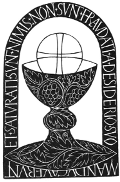
Tantum ergo (tune: Pange Lingua)
Therefore we, before him bending, This great sacrament revere:
Types and shadows have their ending, For the newer rite is here;
Faith, our outward sense befriending, Makes the inward vision clear.
Glory let us give and blessing To the Father and the Son,
Honour, might and praise addressing, While eternal ages run;
Ever too his love confessing,
Who, from both, with both is one. Amen.
V: Thou gavest them bread from heaven, Alleluia:
Response: Containing within itself all sweetness, Alleluia.
The priest then chants the Collect of the Feast to which all respond: Amen.
The priest then approaches the Altar to take up the mon-
strance. He then proceeds to solemnly bless the congregation. The Divine Praises are then repeated after the priest:
Blessed be God.
Blessed be His Holy Name.
Blessed be Jesus Christ, true God and true man: Blessed be the Name of Jesus.
Blessed be His Most Sacred Heart.
Blessed be His Most Precious Blood.
Blessed be Jesus in the Most Holy Sacrament of the Altar. Blessed be the Holy Spirit, the Paraclete.
Blessed be the great Mother of God, Mary most Holy. Blessed be the Name of Mary, Virgin and Mother.
Blessed be Saint Joseph, her most chaste spouse. Blessed be God in His Angels and in His Saints